The LAC changed the cultural and urban layout of Lugano. Strongly desired by the city, not as a mere container but as the propelling center of a new neighborhood where arts and culture could meet and express themselves, it had to include all the necessary spaces and resources. That is why it focused the city's planning and economic efforts on itself, becoming in fact, not only a major undertaking, but the most significant gesture in charting the new path forward.
The complexity of the project required a proposal that exactly met the city's expectations. That is why in 2001 a competition was announced, participated in by 130 firms and won by Ivano Gianola, an architect who has always conceived works closely related to the place. And such was his design for the LAC.
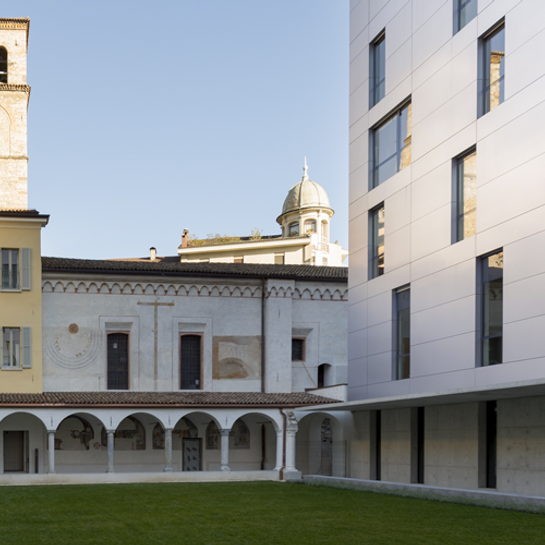
The cultural center, with all the compartment that constitutes it, incorporated some architectural jewels already present in the area, such as the important church of Santa Maria degli Angioli, which contains 16th-century frescoes by Bernardino Luini, the Franciscan convent and the adjoining cloister. The whole structure appears as if positioned in the center of a cross: at its sides the historic center and the new urban expansion area extending toward Paradiso, behind the hill with the park and, in front, the lake. It thus becomes a kind of filter, a beating heart of the city that gives life and encloses different urban contents.
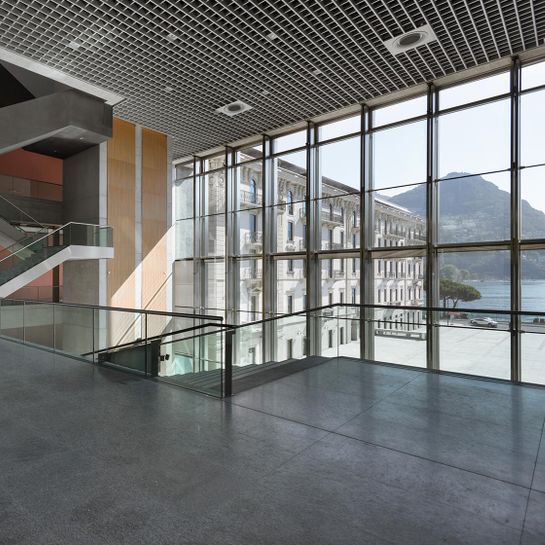
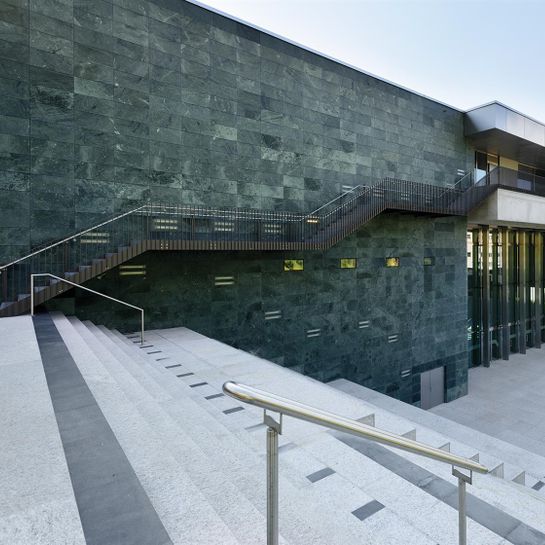
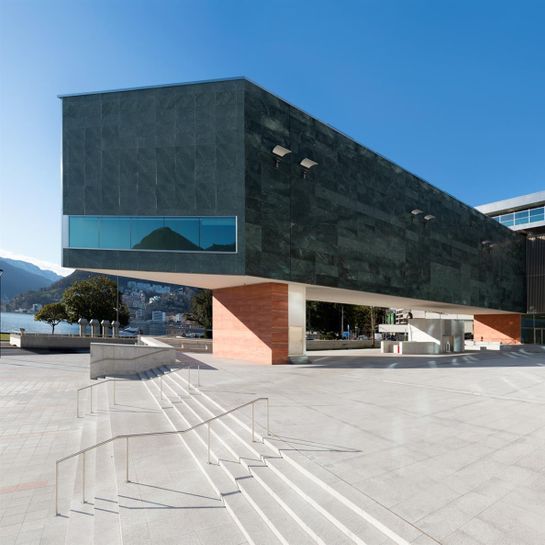
The best place to admire this project, and to understand the vision that inspired it, is Piazza Bernardino Luini. Embraced by the modern silhouette of the LAC and the historic façade of the former Grand Hotel Palace-converted to residential space-it was itself born as part of the design and is its essential and complementary external lung, where passages flow and from where all the possibilities offered by the new center start. Today it is Lugano's largest square, and all this width allows it to balance the building's grand architecture and to welcome its public, which from here begins its exploration, penetrating into the inner courtyards of the old part or entering the majestic geometry of the hall to access the museum or theater.
Visually striking, the 650 square meters of this imposing atrium, multiplied without interruption to the top of the structure, are made even larger by the double transparency of the glass walls, facing the square and the lake on one side, and the amphitheater and the park on the other, effectively nullifying the perception of a distinction between inside and outside. A welcome that is perfected by the easy access to the services for the public: the ticket office, checkroom, bookshop and dining areas, connected to the other rooms by the stairs that connect all the floors.
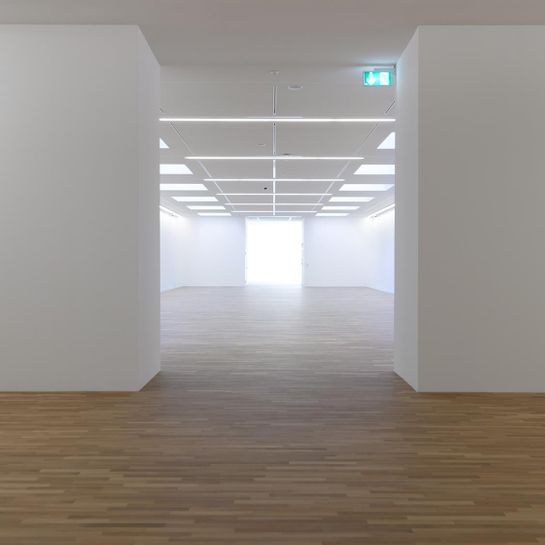
The left wing, with its raised and pointed shape covered in green marble, is dedicated to the works that have flowed into the Museum of Art of Italian Switzerland (MASI): the prestigious collections of Lugano and the Canton of Ticino find space on three exhibition floors, with a total area of 2,500 square meters. The rooms are linear and welcoming, perfectly calibrated in the white, carefully lit walls, with no openings except along the final wall, cut by a long window punctuated by glass panels, "the architect's picture," its creator, Ivano Gianola, called it. A glimpse of the outside that from the second floor frames the historic center and Monte Brè, from the second Monte San Salvatore, as if to reaffirm the link with the territory that lies at the very basis of the LAC's architectural design.
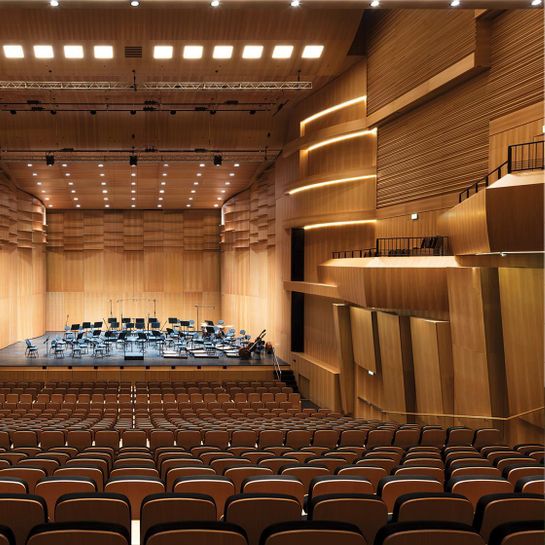
The right wing, on the other hand, is the realm of the theater and concert hall: 800 square meters with nearly 1,000 seats for a compendium of aesthetic and technical research. Thanks to the collaboration between architect Ivano Gianola and Munich-based Müller BBM - a leading company in the field of acoustic engineering - this hall has absolutely extraordinary adaptability characteristics, allowing it to host symphony concerts of the highest level as well as opera, dance performances and theatrical shows. A versatility achieved by applying special solutions to make the acoustic shell modular and create a mobile system for the orchestral pit, which can rise to the level of the stage, extending it to the first row of chairs. It is one of those occasions when architecture becomes art.
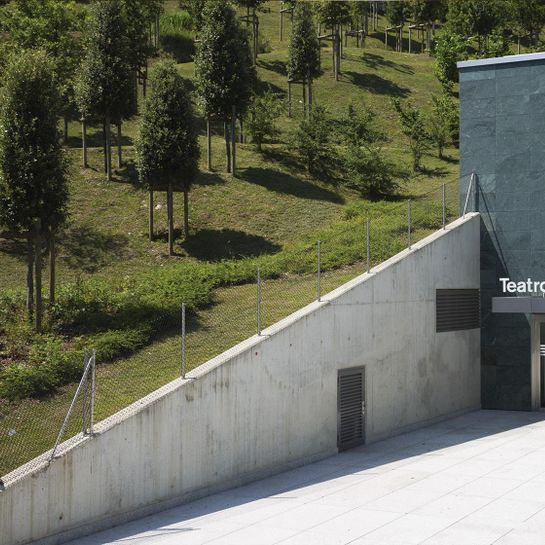
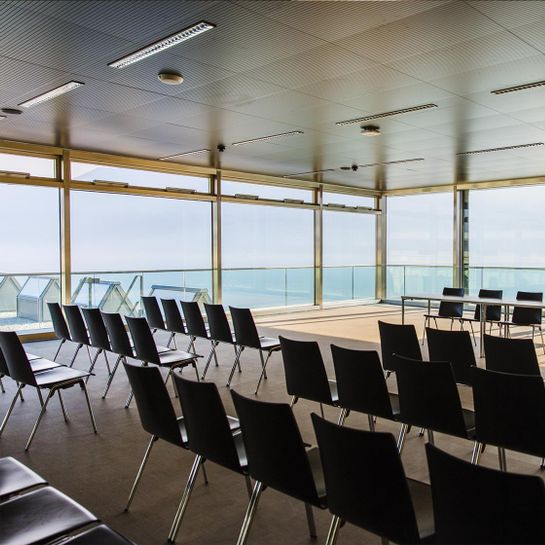
The part that leads from the lobby into the inner park, on the other hand, has been dedicated to an element that could not be missing in the cultural center of a city like Lugano: to outdoor performances: the Agora is a small amphitheater, which recalls in the design of the tiers the architectural rhythm of the structure. And the play of levels continues just above, where another open space leads to the Teatrostudio, the large room, completely free of furniture, reserved for rehearsals and small performances. Also located on this floor, the last of the building, are some of the multi-purpose rooms available at LAC - ranging in size from 50 to 600 square meters - and also distributed in other areas of the structure, including the older part.
This pre-existing area is the ring that connects the complex with the adjacent historic city center. The project included the amalgamation and redevelopment of the 16th-century convent, thus returning to its role in the community. The central body is exposed on a first open cloister, which has as its backdrop the tall stage tower of the theater, visible from here in all its grandeur, and on a second colonnaded cloister, where two event halls and, in the upper part, offices for the staff have found their place. Here is also the walkway on which visitors, before entering the adjacent Church of Santa Maria degli Angioli, linger to admire the fragments of ancient frescoes along the arcades and the harmonious union of ancient and modern, which tells the story and charm of the LAC.