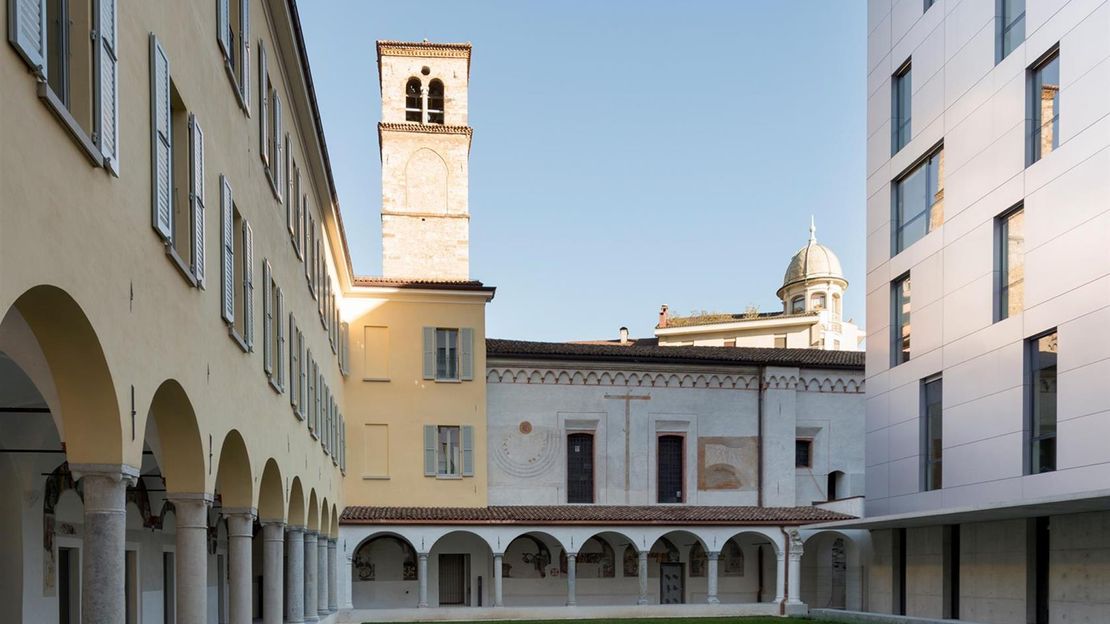
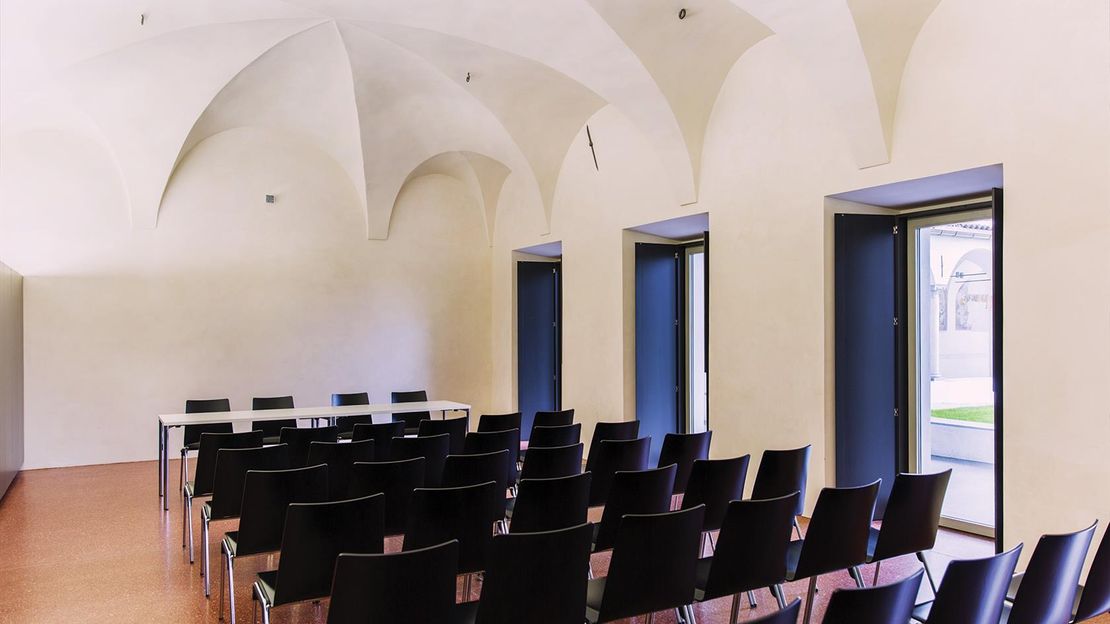
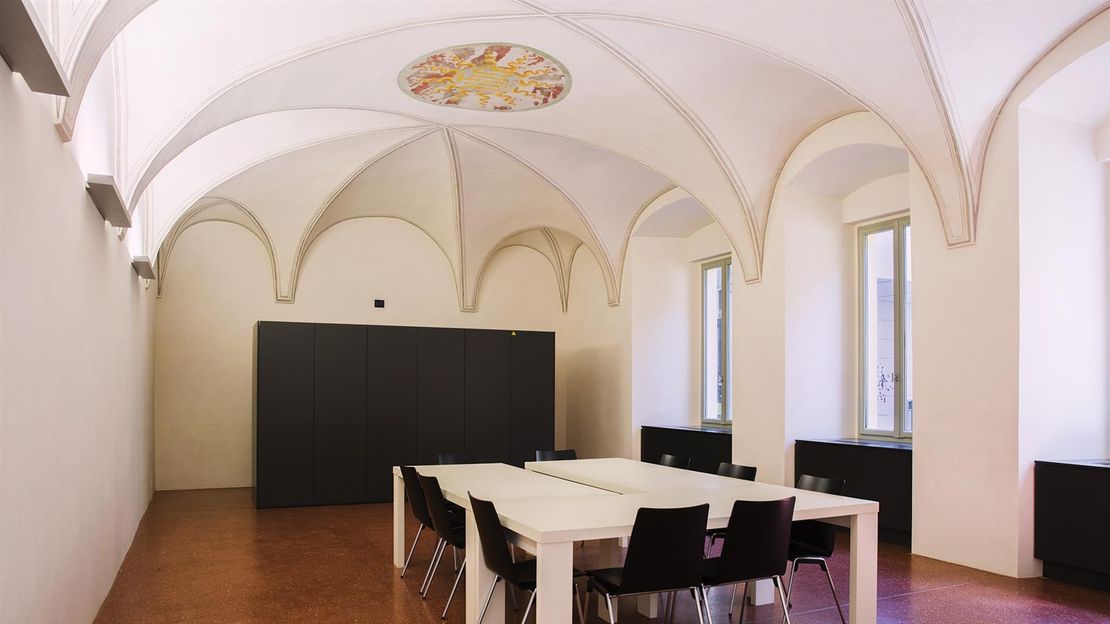
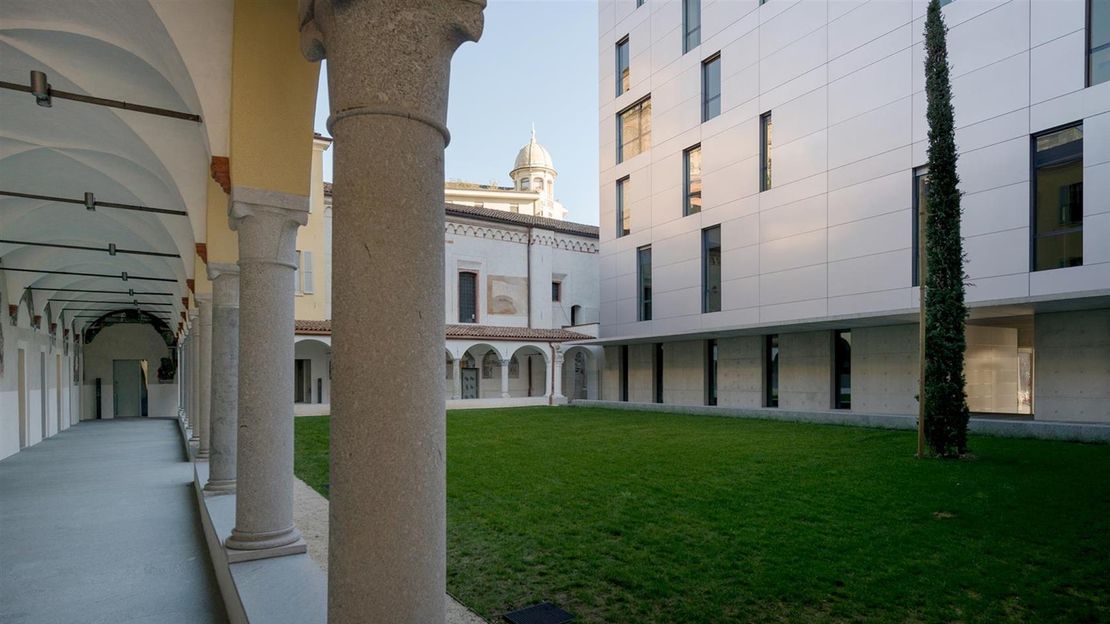
With the LAC, the city also regained the Franciscan convent complex dating back to the 16th century. The restoration has recovered a testimony to the local artistic heritage, bringing to light several wall paintings in the interior rooms and a cycle of frescoes dedicated to St. Francis, also from the 16th century, in the cloister. This is an important piece in the composition of the LAC project that is rooted in the territory, its history and culture. Perfect, then, is the contiguity with the Church of Santa Maria degli Angioli, custodian of the most important Renaissance pictorial work on Swiss territory, the great fresco of the Passion of Christ by Bernardino Luini, and also the proximity to Lugano's historic core, which can be reached from the entrance of Via Nassa. The spaces offered to the public in this ancient area reveal the more intimate face of the LAC, which is revealed by skirting the two cloisters of the convent, the first adjacent to the architectural bulk of the great theater, the second more interior and evocative, with its colonnaded portico and ancient frescoes, partly intended to house the LAC's event rooms and offices.